
Why the ecosystems we ignore may disappear before we learn their true value
Imagine a lake where you can neither drink the water, nor fish commercially. You would probably conclude that such a place does not deserve much attention. That is exactly how saline lakes have been regarded for many years — despite the fact that these unique water bodies account for nearly half of the global lake water volume. An international team of 64 scientists from 20 countries joined forces to debunk this myth. The results of their work, published in Nature Communications, challenge us to reconsider the attitude toward these undervalued ecosystems.
How it all began: the story behind the research
This work has its own challenging history, spanning several years. As one of the project leaders, Egor Zadereev (Institute of Biophysics, Siberian Branch of the Russian Academy of Sciences, Krasnoyarsk), recalls:
“The research idea was born in 2018 from a conversation with Alfred Burian at a limnological conference in China. We were discussing why saline lakes are so underestimated and realized that to change the situation, we needed large-scale data collection from around the world. What followed was an international research effort, interrupted by COVID and Alfred’s maternity leaves, that now was led to its conclusion.”
Zadereev also emphasized that members of the International Society for Salt Lake Research (ISSLR) made significant contributions to this study, providing expert knowledge and data from their respective regions. The collaborative effort of the ISSLR community was instrumental in achieving the global coverage that makes this research so comprehensive.
Alfred Burian (Helmholtz Centre for Environmental Research – UFZ, Leipzig, and Lurio University, Mozambique) adds:
“What drew me into this project was that Egor and I worked in completely different corners of the world but shared the same passion to understand and protect saline lakes. The systems we studied are ecologically very different, but it was stunning that Egor could summarize their management challenges in a way that was valid for both ‘his’ Russian and ‘my’ African lakes. This sentiment grew even stronger as researchers from all over the world joined our initiative, though it was quite sad to hear the same stories of pressurized and disappearing lakes over and over again.”
Life where you least expect it
When it comes to the biodiversity of saline lakes, most specialists recall simple food webs and a limited number of aquatic invertebrate species. And this is indeed true: the higher the salinity, the fewer water fleas, brine shrimps, and vertebrates live in the water. But this view misses something far more important.
The study identified 200 species listed on the IUCN Red List that depend on studied saline lakes in one way or another. And the 53% of these species are birds.
Why birds? Saline lakes, especially in arid regions, function as giant “dining halls” along migration routes. The abundance of algae, brine shrimp (Artemia), and other invertebrates provides a food base that cannot be found in the surrounding deserts and semi-deserts. Flamingos, waders, gulls, and many other birds stop here precisely to refuel before thousand-kilometer flights.
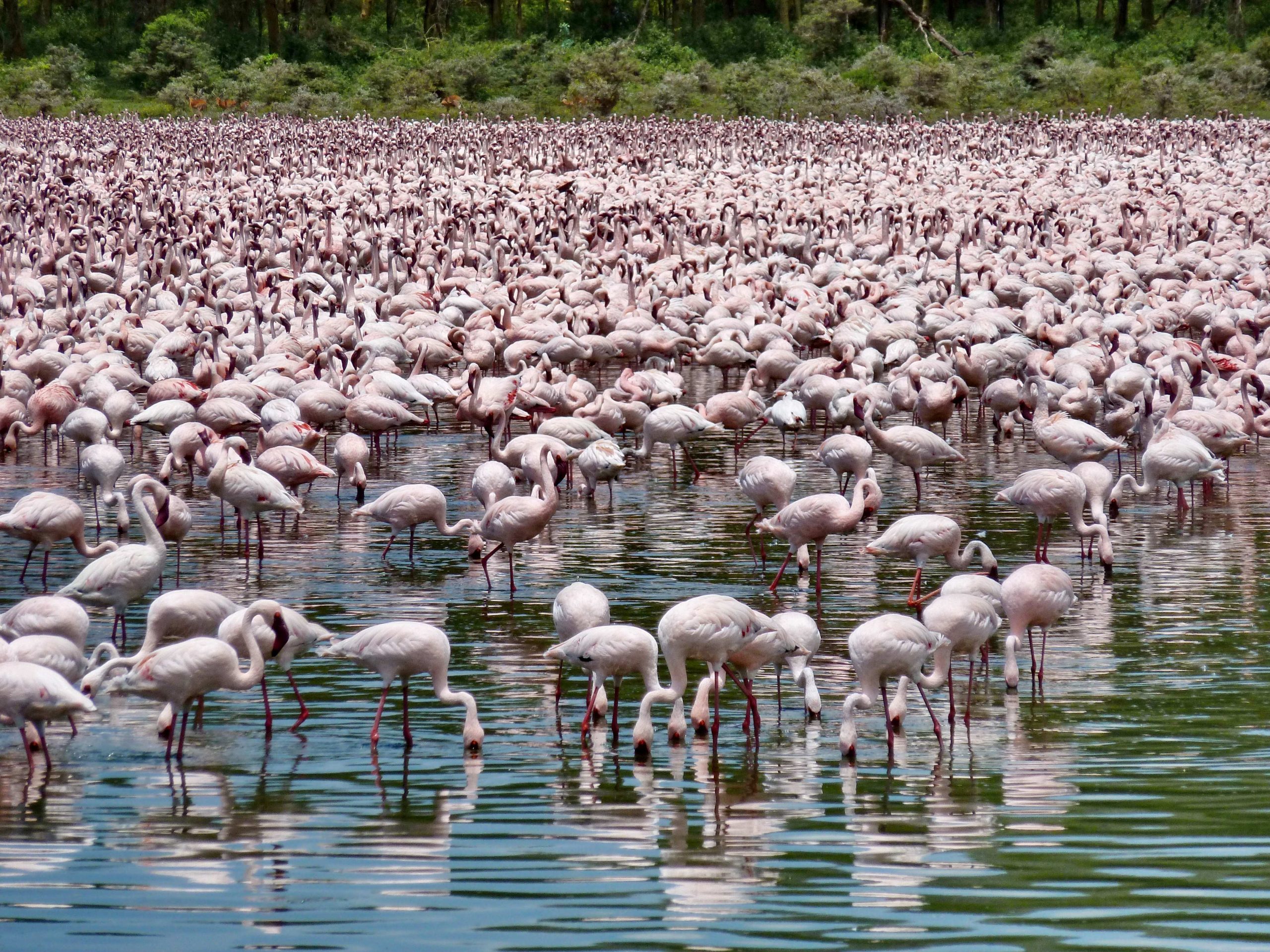
“The overlooked conservation values of saline lakes” includes not only rare bird species but also unique genetic adaptations shaped by extreme conditions.
In other words, if we evaluate a saline lake solely by what lives in the water, we risk losing what lives because of the water. Drain the lake, and we lose not only the brine shrimp but entire populations of Red-Listed birds, mammals and reptiles.
Uniqueness of each lake: the saltwater paradox
Another important finding concerns the diversity between different ecosystems. It turns out that saline lakes are remarkably dissimilar to one another. What works in one lake cannot necessarily be found in another, even at similar salinity levels.
For example, Lake Krasnovishnevoye (Asia), Lake Urmia (Asia), and Seagull Lake (Australia) all have salinities above 100 g/L — three times saltier than ocean water. And each of them supports at least two endangered species found nowhere else in the list of studied lakes. The species accumulation curve shows little sign of saturation even after 85 studied lakes. This means that every new saline lake studied is highly likely to reveal something unique.
Added to this is genetic diversity. Extreme conditions — high osmotic pressure, sharp water-level fluctuations, often extreme temperatures — exert powerful evolutionary pressure. As a result, the microbial communities of saline lakes possess genes found nowhere else on the planet. These genes encode proteins that function under high salinity and could potentially find applications in biotechnology, medicine, and industry.
Services that do not depend on salinity (but depend on how we count)
One of the most unexpected findings concerns ecosystem services — what saline lakes provide to humans. The total number of services per lake does not depend on salinity, which seemed at first counterintuitive to many researchers in the group.
The finding is driven by strong changes in the composition of services as salinity increases as these changes compensate for each other. In low-salinity lakes (1–20 g/L), fisheries flourish. And although fish disappear as salinity rises, average catches in active fisheries are impressive — 2.2 tons per square kilometer per year, almost matching the record figures for freshwater lakes (2.5 t/km²/year).
But when fish leave, salt arrives. Salt extraction becomes economically viable precisely at high concentrations. Another interesting example is the use of lake water. It shows a U-shaped dependence: low-salinity water is taken for irrigation, while high-salinity water is used for industrial processes.
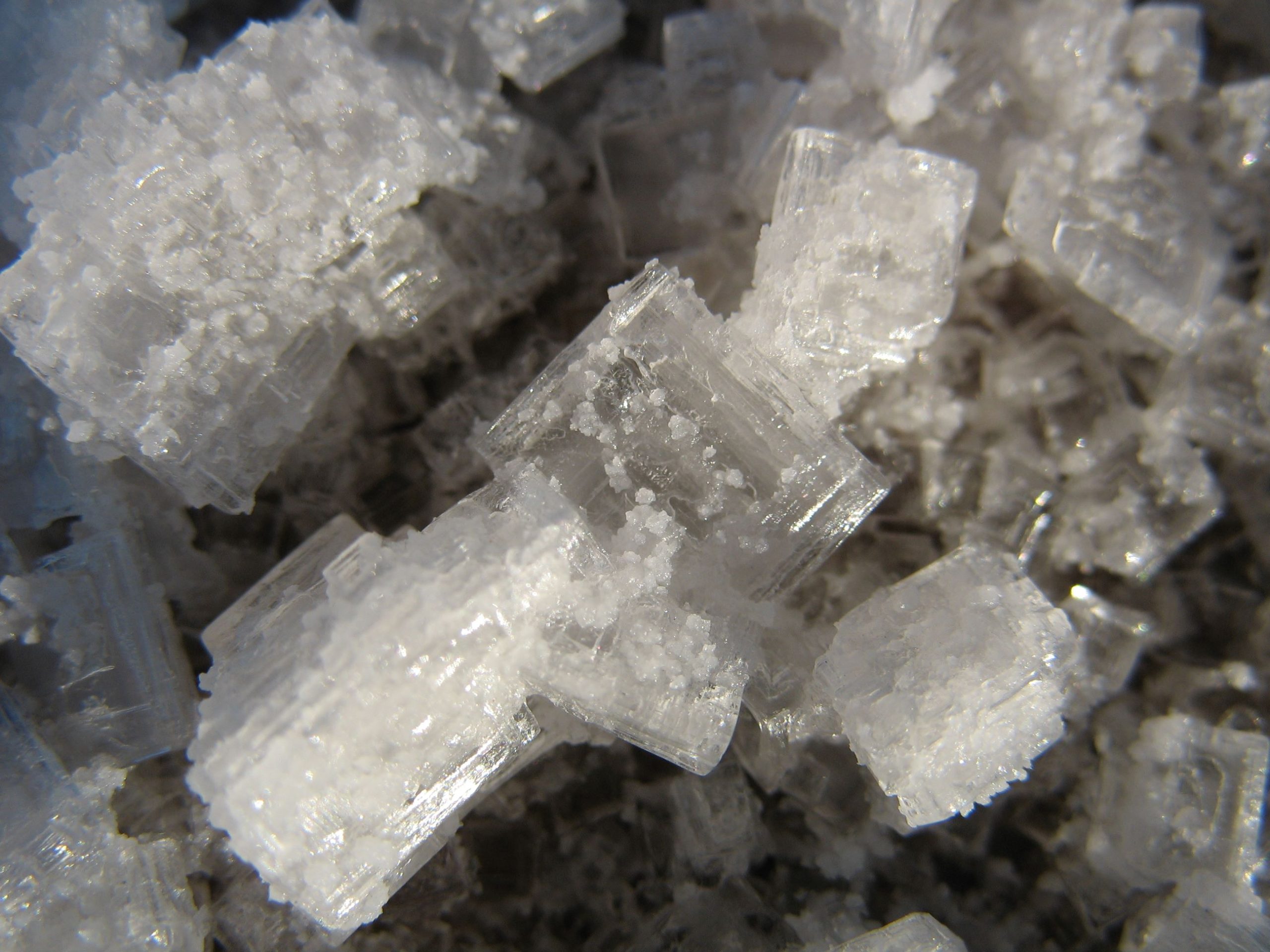
The Artemia fishery — tiny brine shrimp whose cysts are used as feed in aquaculture — generates over $70 million per year in the Great Salt Lake (Utah, USA) alone.
Hidden services: what cannot be measured but can be lost
Beyond the 11 categories of services that scientists quantified, there is a whole range of “hidden” functions of saline lakes. They were not included in the main analysis precisely because they are difficult to measure in numbers, but this does not make them any less important.
Take Lake Turkana on the border of Kenya and Ethiopia. Every day, 46 cubic kilometers of water evaporates from its surface. Winds carry this water vapor to neighboring South Sudan, where it falls as rain. The drying of such a lake would result in a climate catastrophe for the entire region.
The dry bed of a saline lake is a source of salty dust. Such storms cause damage to the health of local populations and agriculture. The tragedy of the Aral Sea is the most striking and painful example of what happens when we ignore this function.
Saline lakes register some of the highest rates of primary production per unit area. Bacteria and archaea work here with high intensity, providing nutrient cycling and carbon sequestration. The researchers draw a bold analogy: the microbial communities of saline lakes are “underwater rainforests” in terms of their functional and genetic diversity. But just as rain forests in the 1980s, we have very little data to understand what drives and maintains this diversity – and what treasures it holds.
The main challenge: managing what is constantly changing
If saline lakes are so valuable, why are they still not adequately protected? The answer lies in their very nature. Saline lakes are mostly terminal water bodies. Their water levels depend on a delicate balance between inflow and evaporation. This means they are hypersensitive to climate change and water extraction in their catchments.
But there is another, less obvious reason. During a series of expert consultations, scientists identified several key characteristics of saline lakes that make them challenging objects for traditional conservation management:
In a freshwater lake, there is a rather clear “good” state (clear water, rich community) and a “bad” state (algal blooms, fish kills). For a saline lake, it is normal to exist in different guises in different years — sometimes almost dry, sometimes spread over many kilometers. And all these states can be natural.
Many species, especially birds and insects, use networks of saline lakes, moving between them depending on conditions. Protecting one lake in isolation from its neighbors might not help to protect from ecological disasters.
Changing water flows in the catchment can affect the lake ecosystem with a delay of 10–15 years. Invertebrate eggs can lie dormant in sediments for decades and hatch when conditions become suitable. This creates an illusion of well-being until collapse becomes inevitable.
What to do? Five practical recommendations
Based on the research results, the international team of experts formulated five recommendations for policymakers and conservation authorities:
1. Manage the entire catchment, not just the lake. Since saline lakes depend on every drop of water entering from the basin, protecting the shoreline achieves nothing without controlling water use upstream. Special attention must be paid to groundwater, which is often ignored in planning.
2. Account for natural variability. It is impossible to compare the state of a lake with some “reference past” that will never return due to climate change. Flexible assessment systems are needed that consider the spectrum of possible natural states.
3. Long-term monitoring is not a luxury but a necessity. Due to delayed responses, one or two years of observations can create a false impression of stability. Only long-term datasets allow us to distinguish natural fluctuations from alarming trends.
4. Involve all stakeholders, especially across borders. Many saline lakes lie in arid regions at the intersection of national boundaries. Irrigation in one country can destroy a lake in another. International management boards are needed, with participation from local communities, including indigenous peoples whose traditional knowledge is often undervalued.
5. Adaptive management in the face of climate change. In most regions, it is impossible to reverse the trends of increasing evaporation and falling water levels. The goal is not to return the lake to its past but to manage its transformation while preserving its key functions and services.
Instead of a conclusion
Saline lakes stand at a crossroads. On one hand, they rank among the most vulnerable ecosystems on the planet. The Aral Sea, Saline Sea in California, Urmia Lake (Iran), the drying Lake Poopó in Bolivia — the list of tragedies is growing. On the other hand, as this study shows, we have all the necessary knowledge to turn the tide and there are positive examples available to guide us along the way.
What remains is political will and the recognition that saline lakes deserve a place on the international conservation agenda no less than tropical rainforests or coral reefs that face similar exposure to stressors. Perhaps now, with the voices of 64 scientists from 20 countries heard in unison, and with years of work behind them — work that overcame pandemic and other obstacles — can convince us to roll up our sleeves and get the job done.